
Back of Everything
Piety, Virtue, and the Transcendental Fact of God

“Unless God is back of everything, you cannot find meaning in anything.”
It was quite common, not so long ago, to find Evangelicals distinguish between “religion” and “relationship” antagonistically. Religion was dead and dusty, the mechanical like performance of duties for God. Christianity was a “relationship” that prioritized the heart and the “personal” (whatever that means). God wants friends/sons, not slaves, and therefore the accoutrements of liturgical fussiness seemingly were consigned to the dustbin (assuming you never see the nasty quasi-liturgical politics of worship bands). It is very easy to mock this naive kind of Evangelical piety, especially as it seemed to fit the wider turn towards “spiritual, not religious” of the demographic Nones. The disinterest in institutions or organizations (i.e. church as family or community) mapped onto a general trend against any regularity to spiritual practice, and this kind of folk spirituality (or, in truth, folk religion) will remain dominant far into the future. But the point here is not to simply see larger cultural trends or fault Evangelicals for some quirky (though fairly popular) rejection of “religion” and its mostly negative associations. It is rather to see how Evangelicals get it right in rejecting “religion” as a perverse form of piety.
It is simply very easy, in this age (and many ages back), for men to find no place in church. It did not start with saccharine emotive music that reduced theology to flutters of the heart. It really has nothing to do with the rise of Revivalism and the heavy accent on emotions that marked movements like Methodism. Church became a unique domain of certain powers and privileges, overseen by a unique caste of men who were specially suited for the management of these affairs. “Church” has often referred to the clergy specifically, as an interest or political bloc, and rarely connotes the laity that are, more often than not, mere consumers or observers. The purveyors of this ghostly power have authority by mystery. Rite gives right, and so it does not matter if the presiding priest is a moron, fat, ugly, cowardly, or a generally detestable cretin, he has authority because of his office. Sadly, the anti-Donatism of Augustine became the priest-class argument for “Hocus Pocus” imbeciles. Say the words, bear legitimate title, and your place in society is locked in. Not a few traditionalists pine for this simple, though fake and disgusting, village faith. But men have generally found this state of affairs to be dull and uninteresting. Business and politics, let alone more unfitting topics like girls or violence, take center stage. Piety is for the half-men who quail under Mother Church’s flowing skirts.
It is for this reason that “religion” is still an off putting thing for men. It is not that men will not put in their time, do their duty (something that is more attractive than looking for a heart felt experience in a worship concert), show up to worship, and then get back to life. There is something manful in showing up. But it is hard to see how this masculine sense could ever befit the actual ministry, a professional task that someone has to do (done especially well if he does not talk too much) but not most men. And who can blame men? Casual acquaintance with many “traditional” or conservative ministers usually reveals fruitcakes and ex-theater kids, if not worse. These are people who like to play dress up and choreograph, with a heavy dose of hectoring monologues or banal common sense platitudes. But it does not really matter because every office in this so-called traditional society has its own place. The traditional man might be a casual drunk and fornicator, but he stands for God against the degeneracy of the age (a trope from a comic book movie). Religion is this quadrant of society that requires a man to pay his dues, but otherwise checkout for more serious work like political theory, security swaps, or literally anything else.
In this schema, more often than not, “religion” is something you have to get into. The traditionalist might have an apology for the superiority of Tradition against the freewheeling woo-woo of his New Age peer, especially as they run the same metropolitan striver circuits. There needs to be some order and rootedness, a culture that is not merely airdropped consumables. Nevertheless, the result is an emphasis on extrinsic performances, and the joy of being the odd-man-out who refrains from meat and/or alcohol during Lent. The recent convert is likely giddy to convey his recently learned factoids of dos-and-don’ts as prescribed by The Venerable Fathers. He is very excited to have a Spiritual Father to control his life for him. However, time sets in and these become habits, like brushing your teeth or taking a shower, that often mean nothing and prompt day-dreaming. The spirit is dead. You can almost hear the line trilling and a brusque “not my department” if you try to pry into anything more substantial like a justification for these beliefs. Eventually piety also is boring, and it quickly becomes the domain of effeminate nerds that like to wear ornate dresses.
This sociological analysis flows from an even deeper philosophical well. Religion is the final crowning of Human civilization, like the last row in a tech tree. Man can live fairly well enough through natural morality, the supposed instincts in preserving family, honor, career, and character. Not being a liberal, who has melted faith into morality, religion is not just getting a sermonette on being a nice guy. It involves mystery and sacrament and divine confection, all coated with foreign or forgotten ceremony. But what do these rites really mean for modern man? Old pagans might really believe their prostrations and sacrifices really did convince the gods. But today’s traditionalists struggle to role play these cause-effect relations between ecclesiastic ceremony with the unfolding of the world.
Tradition and religion are justified on the grounds of sociology and civilization, not because it is the fabric of reality at stake. Does a man “believe” in the theories of germs or gravity when he modulates his actions? It is rather more of a second nature, a form of life that envelops the person. When the Evangelical rejects, alongside his New Age peer, “religion” as formulaic and dead, he is issuing an attack on the empty tea rituals of increasingly emptied religious institutions. Even as the emphasis on “experience” or “relationship” has its own substantive problems, Evangelicals rightly understand that they seek something real, not the phenomena of ritual, which quickly fades in novelty after a few decades of generational experience. A man quickly becomes interested in power and control, turning to more interesting and vigorous pursuits. Assuming one has the intellectual capacity to even parse the issue, there is only so many times one can relitigate confessional wars, arguments that are as potent as refighting World War Two in a map game. Religion is just another factor, another element, one that a man does without the same kind of crushing guilt and superstitious circumspection that his ancestors likely possessed.
But all of this presumes a very faulty view of reality. What if “religion” was not the end or the beginning but soaked through the all in all. It is all too common to treat God as among the gods, one who deserves obedience and sacrifice, a ten-percent you toss to pay your dues. There is no self-sufficient world over which a ghostly threat hangs. The whole of everything is suffused with this divine presence, like light flooding the world in the coming dawn. One does not need to make a special occasion to stare at the sun to appreciate sunlight, it is a given in all things throughout the day. A man who could see, felt warmth, but had no idea why or where it came from, completely oblivious to solar illumination, would be treated as a very special kind of fool. The same applies to piety. It is not a question if you are into religion or not, of whether or not it is your department. Every man, by the sheer fact that he exists, is forced to give an account. Piety is a question of skill, the ability to interpret right and act accordingly. Man has the ability to squander his intelligence and ability, wasting away to an inept ape-like husk. But why would anyone do that? Man has an instinct to worship as he does to breathe.
This pivot dovetails well with the grand power in the Transcendental Argument for God apologetic. It is not a matter of trying to weigh the evidence on a neutral basis, to see if the Old Chap is really up there and running things or not. For Bertrand Russell to even introduce his teapot is a category error born from the mediocrities of religion. The question of God is not whether there is some great mover or cause who needs his cut (with his professional caste of servants who will collect for him). The question of God is the precondition for any discussion at all, as much as a category like logic is given before any actual arguments or syllogisms can be made. If knowledge of God is transcendental, it reframes the entire question about what “religion” or “piety” means in the first place. These are not things you choose to do or not, anymore than a man can choose to believe in language or not during a discussion. If a man is not pious, he is not equivalent to an role-playing character choosing to specialize as a sword-fighter instead of a priest, leveling up his stamina instead of his spirit. Rather, a man who does not want to be pious is like a man who takes hormone blockers.
Understanding God as transcendental (which is biblical, even if this concept is pseudo-Kantian) opens up new horizons. For those who treat religion as an attachment to an otherwise subsistent nature, it is very easy to slip into default atheism. Juggling dogmas and doctrines to find the true faith, the true church, the true religion can easily sap away any vitality for life. The boredom then likely settles in. Reality still is there whether or not you do your Sunday morning routine or not, the world does not seem to change if you accidentally ate ham on Friday. These disciplines do not reflect a transformative monastic life and thus easily fade in color. It is an addendum that makes a claim on a percentage of your life. But God is not making a claim on morals and a little bit of time every week, conformed to some great never-ending seasonal cycle of fasting and feasting. The God of the Bible claims everything at all times. Prayers of thanksgiving are fit not only at the dinner table or in church, but even in the bathroom for a successful bowel movement. I mean not to be crass, only to emphasize the universality and totality of Heaven’s mandate. God does not pertain to the spiritual part of man, with saintliness as a denial of materiality. God reigns over the blood and guts, for He is the very source of their twisting and flowing.
It is not a question of God probably or probably not existing. The sheer fact of the world’s existence, the ability to think or reason, presumed upon the existence of God. The flash of your eyes as you screen these words, and the intelligibility of the same, is a manifestation of God. The resentment for Modern Man is that he is free, and this freedom is so very wicked because it means a rootlessness to the customs that would normally tie and bind him. Thus the average traditionalist plays into the role that the Enlightened liberal assigns him, the priest with his chains and hooks seeking to drag man back into slavery, but swaps the evaluation. But this paradigm is impotent as a force to resist the tide of civilizational change. As long as traditional political figures existed then traditional culture had a means to fight. Without it? The plunge into Modernity is irresistible, and traditionalists sound like goldbug libertarians predicting that the fiat dollar is going to collapse any day now.
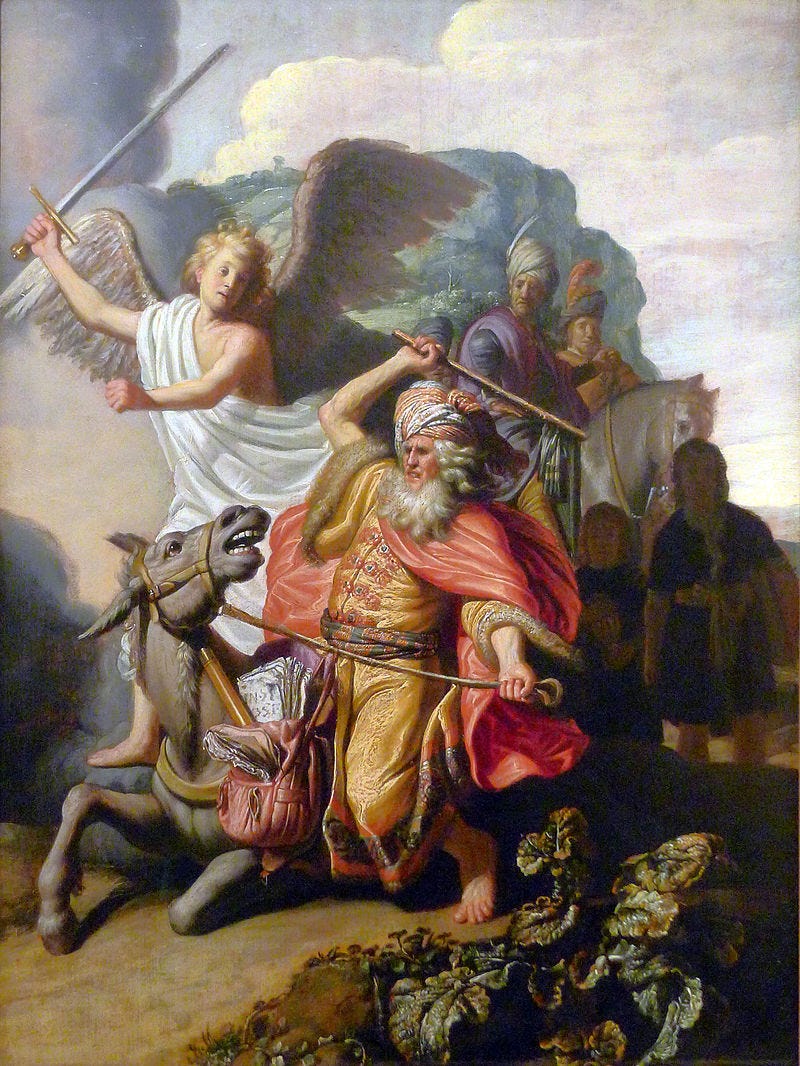
The desire to reenchant the world or reintroduce a “spiritual” (imaginary) awareness is a flight from the challenge. There is no return. It does not matter how many mushrooms or intoxicants men take to chase a fake spiritual experience, the category of “Religion” has been shattered. The way out is through this wreckage because all of these things are from the hand of God. Leave these fantasies to drug addicts and neo-pagan comic book altars to Thor. The question of piety and God is a question of knowledge, of science, not instinct or intuition. The Bible treats the awareness of God as a given that the wise man cultivates and the fool bitterly tries to suppress. Piety is a summons equivalent to learning to lift with your legs. Do not allow the fairies to monopolize this term for their pageantry, leaving disaffected men to chase the mediocre profundities of Emperor Marcus the “Wise.” It is imperative to open your eyes and see the world from a new vantage, one over which the sword of the Lord hovers constantly. Religion is not a question of believing in the mysterious or reestablishing the foundations of civilization; it is a totalitarian demand on every aspect of life. Piety is not punching your ticket and letting the professional eunuchs do their job. Rather, like Balaam’s donkey, it is about keeping your head.
Thanks for writing this Cal- you’re writing what I’ve wished & tried to say lately, but cannot express with words quite right. Only- why can’t we get this on Twitter anymore?
One of your best!